During my last trip to the northern coast of Colombia, my home country,
I had the opportunity to visit probably the most amazing place I have ever
been to. The place is called the lost city of the Tayronas.
The Tayronas are one of several indian tribes that inhabited the Sierra
Nevada de Santa Marta (Snowy Mountain of Santa Marta) located in the northern
part of Colombia which only 45 kilometers (30 miles) from the ardent Caribbean
coast rises to 5,757 meters (18,800 ft.) above sea level and maintains
some of its peeks permanently covered with snow.
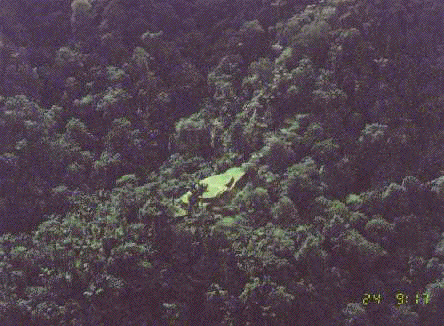
This is the view from the air of the main terrace of the lost city.
It was here that the Tayronas had their main temples to celebrate various
ocassions. Today, this terrace makes a perfect landing spot for the Helicopters
that bring a very limited number of turists to the park.
From what is known, construction of the lost city started in the year 1200
AC and was inhabited well into the times of the Spanish conquest, that
in the Sierra Nevada lasted until the 1600. The city was conformed by a
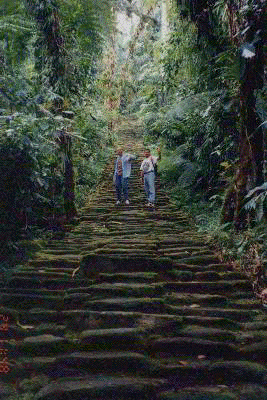
multitude of dwellings spread over a large area and raised from terraces
built in the very steep slopes of the mountain. The various "bohios"
(picture) were linked by a complex network of primary and secondary path
ways paved with limestone slabs carved from the area and placed marvelously
over the very rough terrain surrounded by magnificent and very thick vegetation.
(Picture)
The presence of this city was only known by the "guaqueros" (treasure
hunters) that for several years removed the majority of the archeological
artifacts and that in 1975 finally told the authorities about the lost
city. The area discovered lies between 900 and 1100 Mts. above seal level,
deep inside the mountain above the valley of the Buritaca river.
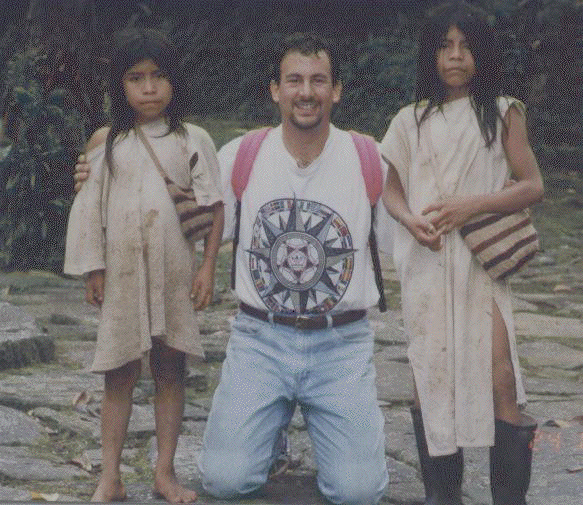
There are still some indians (picture) living in the area but none in the
lost city that is now an arquelogical park. Access not only is very difficult,
two days walking or by helicopter, but is very restricted to ensure the
preservation of the zone. Those arriving on foot get permission to stay
over one night, those arriving by air are supposed to return the same day,
unless they are as 'lucky' as we were and the dense fog known in this tropical
areas traps them.
The Kogi indians chose to build their magnificent terraces and ceremonial
temples on the crest of a mountain with a pyramidal shape here they felt
the presence of a source of energy that was going to help them with their
crucial, self-imposed task, of the being guardians of the universe. Among
other things, the Kogis felt responsible for ensuring that the sun rises
every day, that it sets every day, that it rains etc. They have certainly
thought us a very big lesson when it comes to protecting the environment
and living in peace with nature which is the sole source for their existence.
 Back to David
Bigio's home page
Back to David
Bigio's home page